 Anna Sheronova

In short
An inactive gym member is one who still pays but has stopped coming: no visit in 30 days, no visit in their first week, or visits that have halved against their own habit. Every Monday, list them from your booking system. Send each a personal message that asks a question, a second a week later if there is no reply, then let someone they know call. Count how many on the list train again within 14 days.
Lisa Jansen came to the Tuesday 18:30 class every week for months. Her last visit was five weeks ago. Her membership still renews, nobody has said anything, and the next thing your gym hears from her may be a cancellation.
Members rarely announce that they are drifting away. They stop booking, and the payments carry on for a while. In a study of three US gyms, monthly members kept paying for 2.31 months on average between their last visit and cancelling. That gap is when a message from your gym can still change the outcome.
Which members count as inactive?
Three signals cover most members who are slipping away. Use the ones your booking system can show you.
- Days since the last visit. No visit in 30 days is a good default. If most of your members train twice a week, three weeks already means something.
- A new member's first week. Someone who joined and has not been in after seven days is the most urgent name on any list. The habit has not formed yet.
- A drop from their own habit. A member coming once in three weeks after a year of weekly classes says more than a member who has always come twice a month. Compare each member with their own usual, not with the average.
Leave out members on a freeze, members who told you about an injury or a holiday, and anyone with a class already booked. They are not drifting; you already know why they are away.
Build the Monday list from your booking system
Once a week, on the same day, pull one list. Monday works because people make plans for the week.
From your booking system's member and attendance data you need five columns: name, join date, last visit, whether they have anything booked, and how often they usually come. Filter to active memberships with no upcoming booking, then apply your three signals. If your booking system can save that filter as a report, next Monday it takes minutes.
Sort the list with the longest absence first, and new members in their first weeks at the top. Write down how many are on it this week; you need that number later.
What to send, and in what order
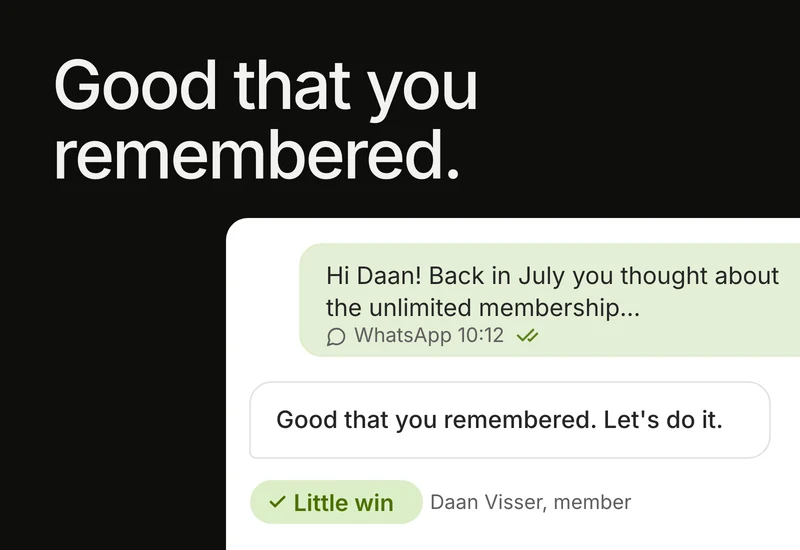
Start with one personal message that asks a question. A question gets replies.
Name something only your gym knows, such as their class, their usual time or their coach. Answer a reply the same day, and offer the fix that matches the reason: another time, a different class, a pause, a session to restart.
If there is no reply after a week, send one more, shorter and easy to answer:
Hi Lisa, just checking in once more. If a different day or a short pause would help, tell me and I’ll sort it.
After two messages with no reply, stop messaging. Let someone the member knows call, or say hello at the desk next time they come in. Then take them off the list for a month.
Our WhatsApp automations can rebuild the list from the visits in your booking system and send or prepare these messages with the steps and timing you choose, depending on which tools are connected. We set them up with you.
What not to send first
Do not open with a discount. It tells the member their absence is about price when it usually is not, it teaches regulars that going quiet pays, and it costs you money on people who would have come back for a kind word. Keep a price offer for the few who say money is the reason.
Also leave out:
- A broadcast to the whole list. "We miss you!" to two hundred people reads as automated.
- Guilt about paying for nothing. Reminding someone they pay for a membership they do not use is a reminder to cancel it.
- "Do you want to cancel?" Ask what changed instead. If they do want to stop, they will tell you, and then a person should reply within a day.
Who should send it
The message should come from the person the member knows best: their coach, the trainer who did their intro, or the owner at a small gym. Send it from your gym's number, signed with a first name.
In data from retention software used by UK clubs, members at risk of leaving who agreed with staff on when to come back were about half as likely to cancel the next month.
Give one person the list each week, with ten minutes a day to work through it and answer replies.
How to tell it is working
Track one number: the share of this week's list that trains again within 14 days. Write it down every Monday next to the size of the list.
Next to it, count three outcomes for everyone on the list: came back, paused, cancelled. A pause is a good result; that member is still yours. If the share coming back stays low for a month, look at the first message before you look at anything else.
How it fits with the first 90 days, failed payments and cancel requests is in the guide on gym member retention strategies.
Questions people also ask
When is a gym member inactive?
When they have had no visit in 30 days, no visit in their first week as a new member, or visits that have halved against their own usual pattern. Pick one rule for your gym and keep it, so the list means the same thing every week.
How long do members keep paying after they stop coming?
Often months. In a study of three US gyms, members on a monthly contract kept paying for 2.31 months on average after their last visit before they cancelled, and one in five waited four months or more. That gap is your time to reach them.
Should I offer inactive members a discount?
Not first. Ask what changed and offer a fix for that: another class time, a pause, a session with their coach. Keep a price offer for the few who say money is the reason.
Should I message or call a member who stopped coming?
Message first, because it is easy to answer when it suits them. If two messages a week apart get no reply, someone they know can call or speak to them at the desk.
Can I message inactive members on WhatsApp?
Yes, from your gym's number, to members who agreed to hear from you there.