 Anna Sheronova

In short
Published figures, mostly from the US, put gym trial conversion rates at about one in three, but the number depends on what you count. Split yours into show-up, finishing the intro and joining.
- The sale: Most of the sale happens in the room, from the coach who ran the class.
- After the class: Someone who came once and someone who finished the intro without joining need different follow-ups.
- Free or paid: A free trial brings more people and more follow-up; a paid intro offer brings fewer, keener ones.
Lisa Jansen came to Thursday’s 19:00 beginners class and told Sanne, the coach, that she loved it. Then she went home. Nobody mentioned a membership, and nobody wrote to her the next day.
If your leads never get as far as booking a trial, start with follow-up for leads who never booked.
Your gym trial conversion rate is really three numbers
One percentage for “trial people who joined” mixes three steps, and each one breaks for its own reason.
Figures published mostly by US companies that sell to gyms put that percentage at about one in three of the people who come in for a trial. They also put show-up at about 6 in 10 of the people who book a free trial. Multiply the two, and roughly 2 in 10 bookings become members.
Count three numbers instead, for last quarter, and compare each with the quarter before. Count a join only when it comes within the same set time after the trial, such as two weeks, so the quarters compare.
| Where it usually breaks | The first thing to fix | |
|---|---|---|
| Booked to showed up | The class is days away, nobody reminds them, or the time was a guess | Two reminders, and an easy way to move the time |
| Showed up to came back or finished the intro | Nothing is booked before they leave, and the intro has no end date | Book the second visit before they leave, and give the intro an end date |
| Finished to joined | Nobody asks, or someone they haven’t met asks | One clear offer, once, from their coach |
The middle row is the easiest to miss. Of the people who bought the intro, how many used both classes? If many came only once, the work is getting them to the second class.
Free trial vs paid trial: a net or a filter
Choose between a free trial and a paid intro offer by how much follow-up your team can do.
| Free trial | Paid intro offer | |
|---|---|---|
| Who it brings in | More people, curious and serious mixed | Fewer people, most of them already set on trying |
| Who turns up | More no-shows, since missing it costs nothing | Fewer no-shows, since they have paid |
| Follow-up it needs | More: reminders, no-show notes and a message after, for everyone | Less, so the coach has more time for each person |
| When it fits | Your classes have room and your team has time to follow everyone up | Classes fill with people who never come back, or the team can’t keep up |
You can also run both, such as a free trial of a few days alongside a paid first month.
Before the class: get them through the door
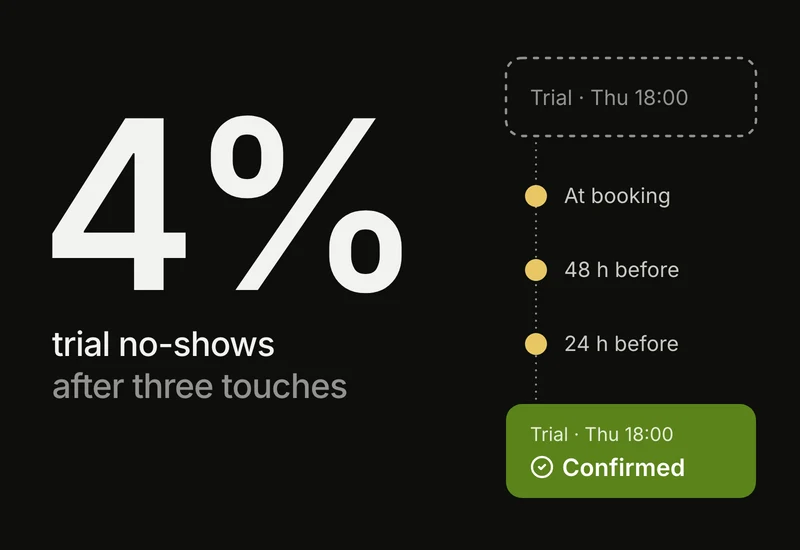
Confirm the booking straight away. Send a reminder the day before and another a couple of hours before. Make it easy to move the time instead of not turning up.
Tell the coach the person’s name and why they came, so the class starts with “You must be Lisa”. If someone misses it, send a friendly note asking them to pick a new time.
In studies of health-care appointments, about eight in ten people who got a text reminder came, against about seven in ten who got none, and a text worked about as well as a phone call.
How quickly to answer a trial sign-up has a guide of its own, and so does whether an AI can book the trial in the chat.
In the room: ask how it felt, then make one plain offer
Ask at the end of the class, while people are still standing next to the coach they trained with.
Most staff find the ask uncomfortable, and that is usually why it doesn’t happen.
- Ask how it felt, and listen to the answer. It is a real question, and the answer decides what you say next.
- If the answer is warm, make the offer. It comes once, from the coach who taught them. Put something concrete in it, such as a start date or a place you hold for them: “The next beginners block starts Monday. Shall I hold you a place?”
- Say when you’ll check in. If the answer was lukewarm, skip the offer and agree when you’ll message instead.
After the class: a follow-up for each group
After a trial, two groups leave without joining, and a third buys a membership but doesn’t book again. One “how did it go?” message to all of them misses most, so each group gets its own follow-up and its own sender.
Came once and hasn’t booked again. Their coach writes the next morning, as a person, asks how they feel and offers a second class if the answer is good.
Finished the intro, but didn’t join. A few days after their last class, someone calls. The same call goes to anyone from the first group who still hasn’t joined by then.
A call gets the questions people don’t type after a trial, such as which membership fits the classes they liked, or what happens if they miss a week. Whoever calls should know when the person trained and what they came for.
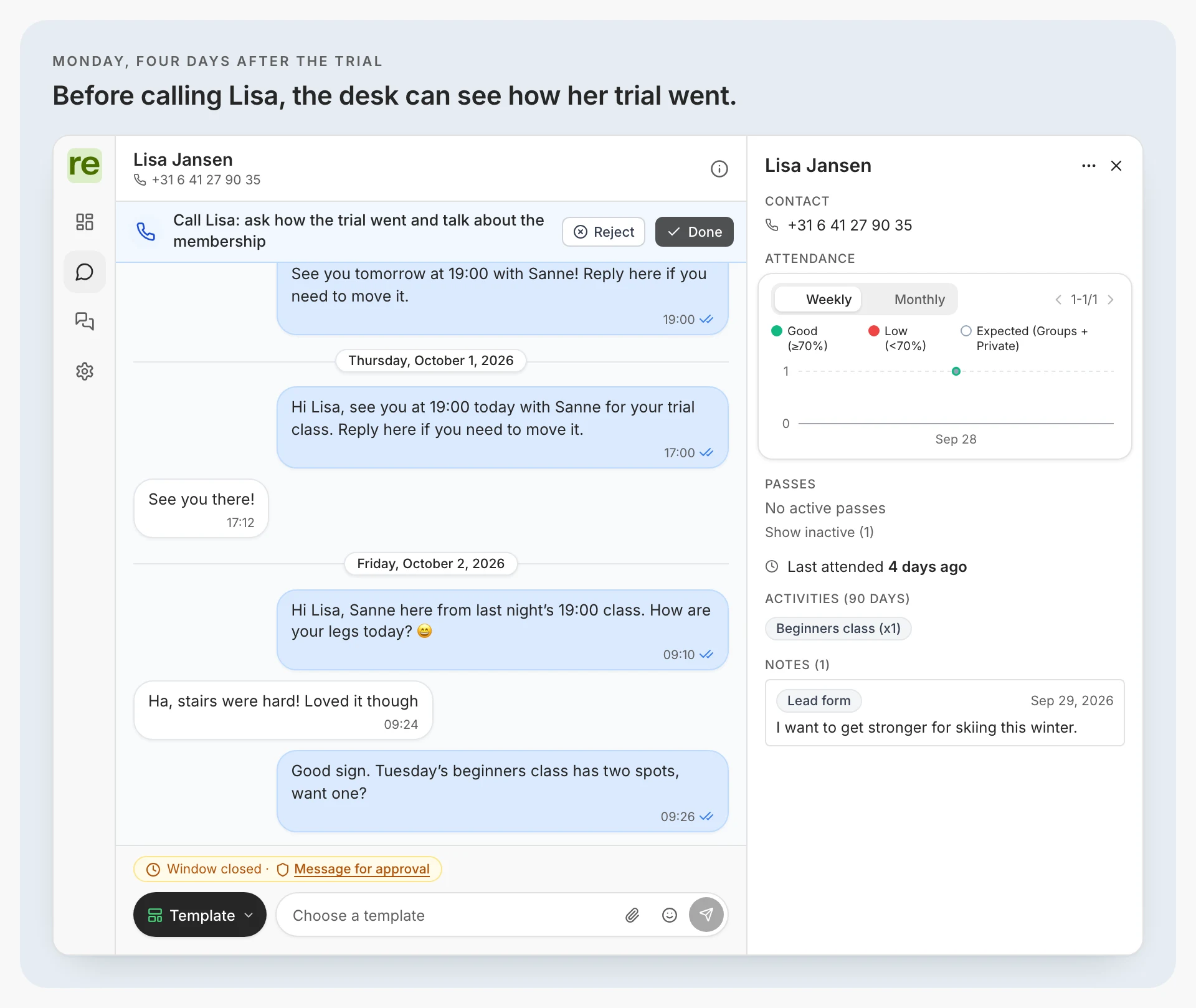
If trial visits are not recorded in your booking system, make one person responsible for a list of who trained after each class.
Bought a membership, but hasn’t booked again. Onboarding starts here, with a welcome and a nudge if they haven’t booked a session within a week of joining.
Regymo’s WhatsApp automations can send the messages around a trial, before and after the class, with the steps you choose and the ones your team approves first, depending on which tools are connected.
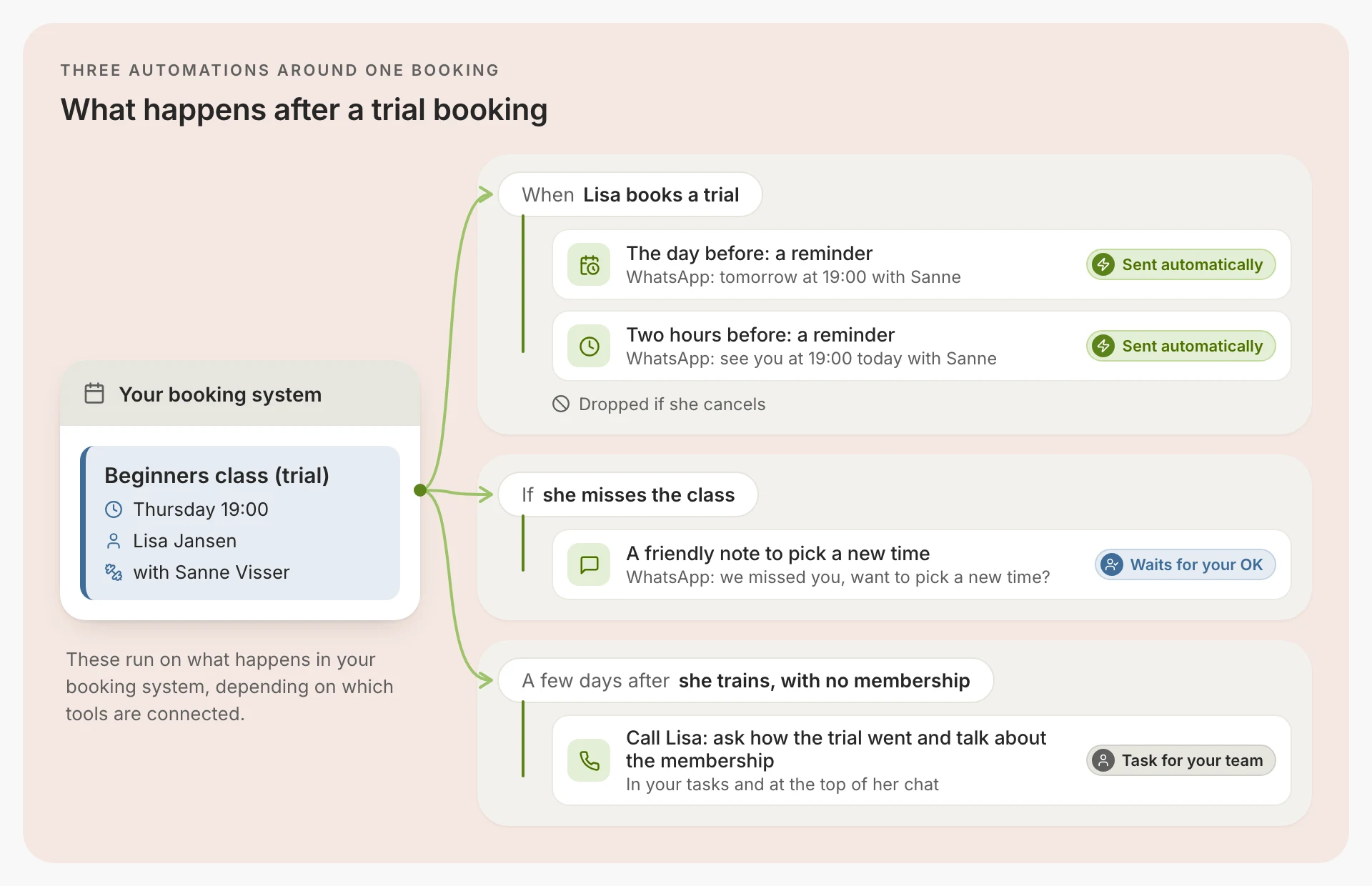
Where the coach can’t write to everyone, the coach’s next-morning check-in can go out as an automation, depending on which tools are connected. An AI step then reads Lisa’s reply and picks the next step from outcomes you name, such as the link to Tuesday’s beginners class if she wants another session, a task for your team to call her if she asks about price, or a check-in a week later if she isn’t sure. We are adding this step to our automations, and the messages it sends are still ones you wrote in advance.
Questions people also ask
What is a good gym trial conversion rate?
About one in three of the people who come in for a trial, going by figures published mostly by US companies that sell to gyms. Small gyms where a coach runs the trial class often see more. Track show-up, finishing the intro and joining against your own last quarter.
Should a gym take card details for a free trial?
Usually not. A card on file filters out people who were never coming, but it also puts off some who were. If no-shows are the problem, a small paid intro offer or a clear no-show rule says the same thing more openly.
How long should a gym trial be?
Long enough for a second visit. A trial that ends after one class gives you one chance to ask. Two classes, or a 14 or 21-day intro for a small fee, give you a natural moment to make the offer.