 Anna Sheronova

In short
Gym lead follow-up is a few short messages over about ten days, each with a new reason to reply, and one call from a person.
- What to send: Reply at once with one question, nudge next day with a concrete time, call a few days later, then send a last message.
- What can go out by itself: The welcome and the nudge are the same for everyone, so they can send themselves as WhatsApp templates.
- When to stop: Stop at a reply, a booking, a no, or after the last message.
Lisa Jansen fills in the trial form on your website at 18:12. The welcome goes out on WhatsApp, and nothing comes back. She hasn’t said no. Many leads who go quiet never do; they get busy, and then they stop hearing from you.
While you are open, reply to a new lead within minutes. When you are closed, an automatic reply can answer straight away; without one, reply first thing when you open.
How fast the first reply should go out, who answers when the desk is closed and, once Lisa books, turning the trial into a membership each have a guide of their own.
A gym follow-up plan to start with
Four touches over about ten days, counting the welcome, make a good first follow-up plan. Each one should give Lisa a reason to reply that the one before didn’t. Change the days once your own leads show you what works.
| The reason to reply | |
|---|---|
| Right away: the welcome | what they asked for, and one question back |
| Next day: one nudge | a concrete time, such as Thursday’s 19:00 beginners class |
| Day 4: a call from a person | a voice, and the questions a message can’t settle |
| Day 10: the last message | permission to say not now |
The welcome picks up what she asked for and ends on a question she can answer in a word, such as a weekday evening or Saturday morning. “How can we help?” leaves her to do the work.
The nudge names one regular class a beginner can start with, so she has something to say yes to. A class that runs every week keeps the same message true for every lead, so it can still go out by itself. Everything after the welcome should wait for your sending hours.
The call is there because some doubts never make it into a message: whether she is fit enough to start, an old injury, or which class to begin with. Sanne, the coach who runs the beginners class, can settle them on the phone. Open with the trial Lisa asked about and ask what is holding her back. If she doesn’t pick up, try once more at another time of day, then leave the rest to the last message.
The last message makes “not now” easy: “No pressure, Lisa. This is our last message about the trial. Whenever you are ready, the beginners class runs every Thursday at 19:00, and a reply here is all it takes.”
When follow-up turns pushy
A follow-up becomes pushy when it only asks again, however many came before it.
So test each message before it goes. What does it bring that the last one didn’t: an answer, a time, a person to talk to, permission to stop?
On WhatsApp, Meta pauses a follow-up template that people keep blocking or reporting, and disables it the third time it happens.
Which follow-ups to automate and which a person sends
Automate the messages that are the same for everyone and whose moment you know in advance: the welcome and the next-day nudge. The last message can go by itself, or wait for someone’s OK. A person makes the call and the offer.
Regymo’s WhatsApp automations can send the first message as soon as a lead comes in and follow up when there is no reply, with the steps and timing you choose, depending on which tools are connected.
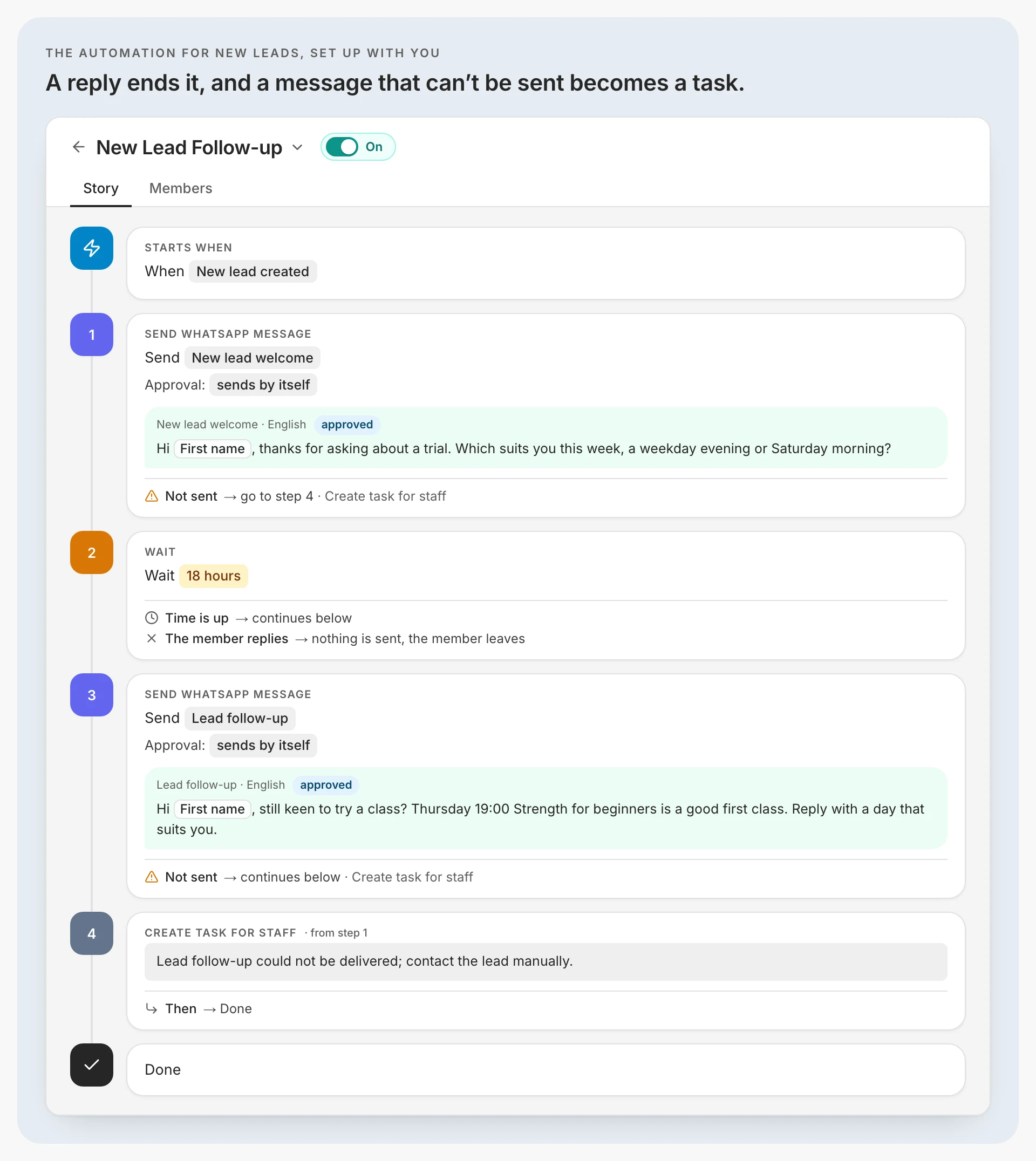
With your booking system connected, a lead who hasn’t booked a few days later can become a call task for your team. We set all of this up with you, including the hours the follow-up may go out.
When the plan stops: a reply, a booking, a no, or the last message
The follow-up messages end at the first of these:
- She replies. It is a conversation now. Your AI agent, if one answers your WhatsApp, or your team carries on in the same chat.
- She books a trial. The trial has its own messages from here.
- She says no or asks you to stop. WhatsApp’s policy requires you to respect that, whether she asks on WhatsApp or anywhere else. Mark her do-not-contact, and your automations stop messaging her.
- The last message goes unanswered. That is the end of the plan.
Write again to a lead whose plan has ended only with a real, new reason, such as a new beginners course, and only if she agreed to hear from your gym.
Instead of stopping at Lisa’s reply, an automation can add an AI step that reads it and picks the next step from a few outcomes you name, such as the class link if she wants to book or a task for your team for anything else. We are adding this step to our automations, and the guide to what to automate at a gym shows where it fits.
Questions people also ask
How many times should I follow up a gym lead?
Three to six tries, going by call records of online sales leads in other industries: most of the people who ever answered had done so by the third call, and more than nine in ten by the sixth. A good plan to start with is three messages and one call over about ten days. Adjust it to what your own leads do.
Should leads from ads, the website and walk-ins get the same follow-up?
Keep the same plan and change only the first message. An ad lead saw an offer and a website lead typed a question, so each welcome starts from that. A walk-in has already seen your gym, so you can ask them straight away when they want to start.
What do I send a lead who said they’d think about it?
Ask what they want to think over, answer it, and offer one specific time. If they go quiet, send one more message a few days later that makes “not now” easy, then stop.
Do I need a CRM to follow up gym leads, or is a spreadsheet enough?
At a handful of leads a week, a sheet works: the date, where the lead came from, the next step and who does it. Someone has to check it at a fixed time every day. Software earns its place when leads arrive on several channels or nobody owns the sheet.